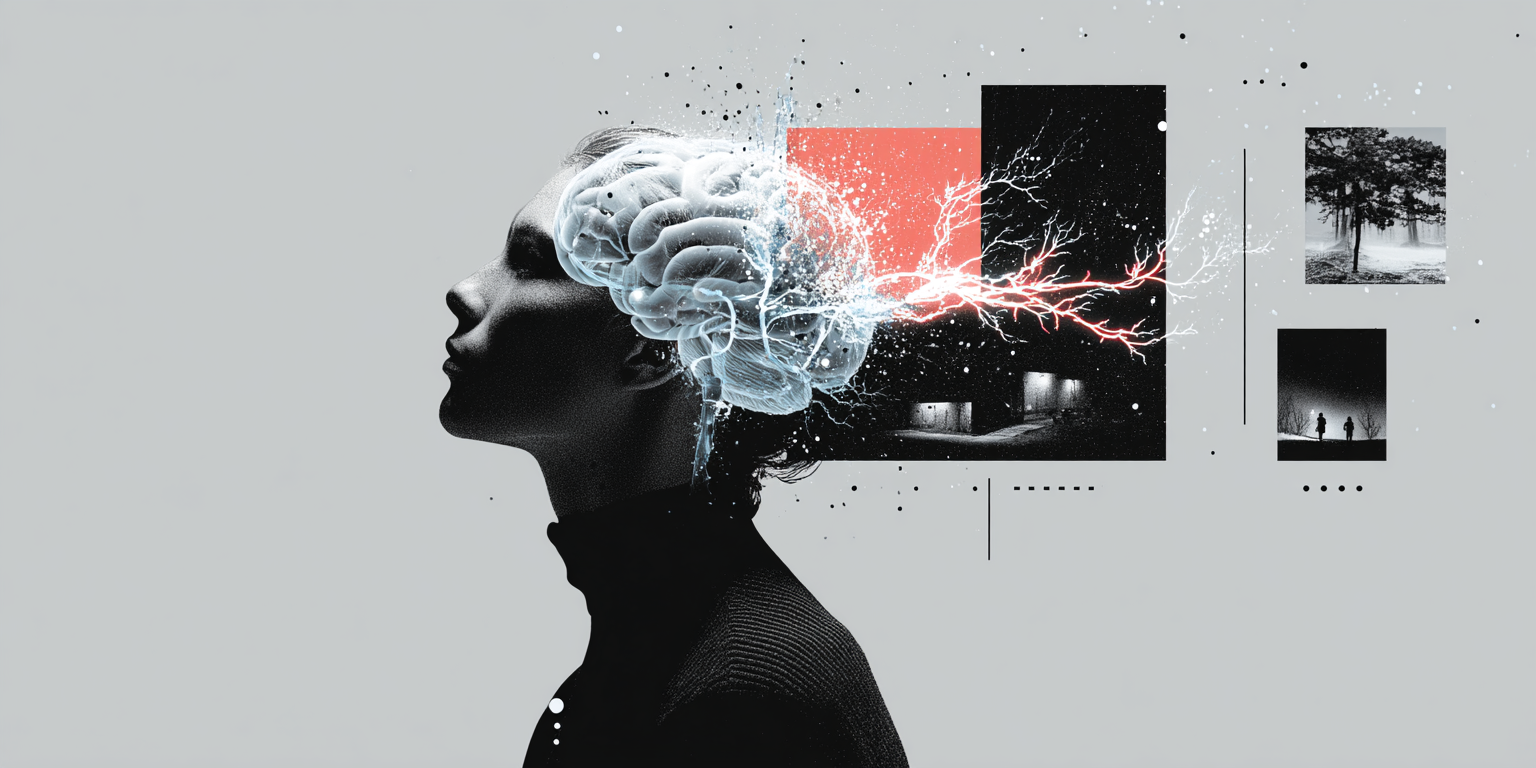
The Neuroscience of Visualization: Why Your Brain Can't Tell the Difference Between Real and Imagined
February 2, 2026
You've probably heard that visualization works. Olympic athletes credit it for gold medals. Fortune 500 executives build it into their morning routines. Neuroscientists have documented its effects in peer-reviewed journals for decades.
So why isn't it working for you?
You might be wondering why staring at your vision board every morning hasn't changed anything. You've pinned the dream house. You've cut out the tropical vacation. You've assembled a collage of everything you want, and yet your brain seems completely uninterested in making any of it real.
Here's the uncomfortable truth: most people are visualizing wrong. Not because they lack dedication or belief, but because they're working against their neurobiology rather than with it.
The problem isn't visualization itself. The science is rock solid. The problem is that your brain operates on sophisticated filtering systems that determine what's real, what matters, and what deserves attention. And generic stock photos from Pinterest? Your brain categorizes those the same way it categorizes billboard advertisements - as irrelevant noise to be ignored.
Understanding why this happens, and how to fix it, requires a brief tour through the neuroscience of mental imagery.
What Are Mirror Neurons?
Mirror neurons are specialized brain cells that fire both when you perform an action and when you vividly imagine performing that action. Located primarily in the premotor cortex, these neurons were discovered in the 1990s by Italian neuroscientist Giacomo Rizzolatti and his research team at the University of Parma.
The discovery was accidental. Researchers were monitoring a monkey's brain activity during reaching movements when they noticed something strange: the same neurons fired when the monkey watched a researcher pick up food as when the monkey picked up food itself. The brain wasn't distinguishing between doing and observing.
Subsequent research confirmed that humans possess an even more sophisticated mirror neuron system. These cells don't just respond to observed actions - they respond to imagined actions with remarkable fidelity.
How Do Mirror Neurons Affect Visualization?
Mirror neurons allow your brain to rehearse physical movements and experiences without any actual movement occurring. When you vividly imagine yourself giving a presentation, shaking hands after closing a deal, or crossing the finish line of a marathon, your mirror neurons activate the same neural pathways that would fire during the real experience.
This is why mental practice works. Your brain is literally building and strengthening the neural circuits required for performance, without requiring physical repetition.
Key characteristics of mirror neuron activation:
Action-specific firing: Neurons respond to specific movements, not general concepts
First-person perspective: Activation is strongest when you imagine yourself performing the action
Emotional integration: Mirror neurons connect with limbic structures, linking actions to feelings
Vividness-dependent: The more detailed and immersive the visualization, the stronger the neural response
But here's the critical caveat that most manifestation guides completely ignore: the operative word is vividly. A passive glance at a generic image doesn't trigger significant mirror neuron activity. The visualization must be immersive, detailed, and emotionally engaging enough that your brain processes it as experiential data rather than background noise.
This is where most vision boards fail at the neurological level.
What Is the Reticular Activating System?
The Reticular Activating System (RAS) is a network of neurons located at the brainstem that functions as your brain's executive filter, determining which information reaches conscious awareness and which gets discarded. It is the gatekeeper between the overwhelming flood of sensory data and the limited bandwidth of your conscious mind.
Every second, your senses collect approximately 11 million bits of information from your environment. Your conscious mind can only process roughly 40-50 bits at a time. The RAS determines which 50 make the cut, and which 10,999,950 get filtered out entirely.
How Does the RAS Filter Your Reality?
The RAS prioritizes information through two primary mechanisms: focus and repetition.
Whatever you consistently direct attention toward, and whatever images or thoughts you repeatedly expose your brain to, the RAS flags as survival-relevant. It then actively scans your environment for anything matching those flagged priorities, bringing relevant information to conscious awareness while suppressing everything else.
This filtering explains several common phenomena:
The "new car" effect: After deciding to buy a specific vehicle, you suddenly notice that model everywhere. The cars were always there - your RAS just started flagging them as relevant.
Selective attention: Parents can sleep through loud noises but wake instantly at their baby's soft cry. The RAS has flagged that specific sound as high-priority.
Opportunity blindness: Entrepreneurs often describe "suddenly seeing" business opportunities they'd walked past for years. Their RAS began filtering for entrepreneurial patterns.
The RAS doesn't evaluate whether something is good for you to focus on. It simply amplifies whatever you've trained it to notice through repeated attention. This makes it both the secret weapon and the hidden trap of visualization practice.
When programmed effectively, your RAS becomes a 24/7 opportunity-detection system, surfacing resources, connections, and pathways aligned with your goals. When programmed ineffectively, or not at all, it simply maintains your existing reality filters, keeping you blind to the very opportunities that could change your life.
What Does the Harvard Research Say About Mental Practice?
The most frequently cited research on visualization's neurological effects comes from Harvard Medical School researcher Dr. Alvaro Pascual-Leone. His landmark 1995 study, published in the Journal of Neurophysiology, provided the first clear evidence that mental practice produces measurable physical changes in brain structure.
Pascual-Leone divided participants into three groups and assigned them a simple five-finger piano exercise:
Physical practice group: Practiced the sequence on an actual keyboard for two hours daily
Mental practice group: Imagined practicing the same sequence without touching any keys
Control group: Neither practiced nor imagined
After five days, brain scans revealed something remarkable: the mental practice group showed nearly identical expansion of motor cortex territory as the physical practice group. Their brains had physically reorganized through imagination alone.
Does Mental Practice Create Real Physical Changes?
Yes. Multiple studies have confirmed that vivid mental rehearsal produces measurable physiological adaptations.
A 2004 study from the Cleveland Clinic Foundation, published in Neuropsychologia, demonstrated this principle even more dramatically. Participants performed "mental workouts" by vividly imagining flexing their biceps for 15 minutes daily, five days per week.
The results after twelve weeks:
Mental exercise group: 13.5% increase in muscle strength
Control group: No significant change
The participants gained strength without lifting a single weight. Their vivid mental practice triggered sufficient motor cortex activation to produce real muscular adaptation.
Dr. Joe Dispenza, synthesizing decades of neuroscience research in Breaking the Habit of Being Yourself, explains the mechanism: "The brain does not know the difference between what it sees in its environment and what it remembers, because the same neural networks are activated in both instances."
This is the scientific foundation validating visualization as a legitimate performance tool. But it requires a critical ingredient that most practitioners overlook entirely.
Why Don't Generic Stock Photos Work for Manifestation?
Generic stock photos fail because they lack the emotional charge required to trigger neurological encoding. Your brain doesn't just process images. It evaluates their personal relevance before deciding whether to invest cognitive resources.
Neuroscientist Antonio Damasio's somatic marker hypothesis, developed through decades of research at the University of Southern California, demonstrates that emotion is the primary driver of both memory formation and decision-making. When an experience carries emotional weight, the amygdala tags it as significant, and the hippocampus encodes it more deeply into long-term memory.
Here's the problem with traditional vision boards:
A stock photo of a luxury beach house might be objectively beautiful, but it carries zero emotional charge for you specifically. There's no story attached. No felt sense of what the doorknob feels like in your hand. No emotional resonance of what owning that home would mean for your family, your security, your identity.
When you look at that image, your brain processes it the same way it processes any advertisement: mildly interesting, perhaps aesthetically pleasing, but ultimately irrelevant to your survival priorities. The RAS doesn't flag it. The mirror neurons don't engage meaningfully. The visualization creates no lasting neural pathway because there's no emotional signal telling your brain this actually matters.
You're essentially showing your brain a beautiful lie and asking it to believe.
What Makes an Image "Believable" to Your Brain?
For visualization to trigger the neurological mechanisms documented in the research, images must meet specific criteria:
Personal relevance: The image must connect to your specific life context, not a generic aspiration
Emotional specificity: The visualization must evoke the feelings associated with the goal, not just the object
Sensory detail: The brain responds to vividness - specific colors, textures, sounds, and physical sensations
First-person perspective: Mirror neurons activate most strongly when you see yourself in the scenario
Repetition with variation: The RAS requires repeated exposure, but the brain habituates to identical stimuli
Traditional vision boards, assembled from magazine clippings and Pinterest saves, fail on nearly every criterion. The images are generic, emotionally neutral, third-person, and static. They might inspire a momentary feeling of possibility, but they don't reprogram your neurology.
This is precisely the gap that artificial intelligence can now bridge.
How Can AI Solve the Visualization Problem?
The challenge with effective visualization has always been practical: generating truly personalized, emotionally resonant, first-person imagery requires either exceptional imagination skills or expensive custom photography. Most people have neither.
AI-powered image generation changes this equation entirely. For the first time, it's possible to create photorealistic imagery built from your specific emotional language, featuring your own appearance, depicting scenarios that exist nowhere else because they're uniquely yours.
vsbo.ai was designed specifically to leverage this capability. Not as a generic vision board tool, but as a neuroscience-informed system engineered to produce imagery your brain can actually believe.
How Does "The Guide" Uncover Emotionally Charged Goals?
The Guide is VSBO's conversational AI coach, and it exists because most people know what they want but haven't articulated why it matters or how it would actually feel.
Through natural voice or text conversation, The Guide uses empathetic questioning techniques to move past surface-level desires into the emotional core of each goal. It explores aspirations across four life categories (people, places, things, and activities) but it doesn't stop at identifying objects.
The Guide uncovers:
Emotional drivers: Why does this specific goal matter to you?
Sensory details: What would you see, hear, and feel in this scenario?
Personal context: How does this connect to your specific life story?
Relational meaning: Who else is present? What does this mean for your relationships?
Want to travel to Italy? The Guide explores whether that's about reconnecting with ancestral heritage, experiencing culinary mastery, finding creative inspiration in Renaissance art, or proving to yourself that you can finally prioritize joy. These emotional specifics become the raw material for imagery that your RAS cannot ignore.
How Does "The Analyst" Create Images That Bypass Your Brain's Filters?
The Analyst is VSBO's second AI system, working silently alongside your conversation to extract structured goal data and generate sophisticated image prompts.
Through a process called Dynamic Prompt Enhancement, The Analyst transforms your emotionally-rich conversation into detailed image specifications. These include composition, lighting, camera perspective, environmental details, and stylistic elements that capture not just what you want, but the feeling-texture of why you want it.
The Analyst feature was designed specifically to bypass the RAS filter by:
Generating 1:1 personalized imagery: Every goal receives a unique, custom-generated image, not a stock photo pulled from a database
Incorporating emotional metadata: The AI embeds the feelings and meaning you expressed into the visual generation
Enabling first-person integration: VSBO's Reference Photo System allows your own face and body to appear in relevant imagery
Maintaining stylistic coherence: Images incorporate your board's color palette and aesthetic preferences
When you see yourself standing in that dream home (your actual face, your actual body, in an environment built from your specific emotional language) your mirror neurons engage fully. Your brain processes the image as experiential memory rather than external advertisement. Your RAS flags it as personally significant, worthy of attention and pattern-matching.
This is visualization that works with your neuroscience rather than against it.
How to Train Your Brain With Images It Actually Believes
The science is unambiguous: your brain can rewire itself through vivid mental practice. Mirror neurons allow you to rehearse success without physical action. The Reticular Activating System filters your experienced reality based on focused repetition. And emotional charge determines whether visualization actually encodes into lasting neural change.
The three requirements for neurologically effective visualization:
Emotional resonance: Images must evoke genuine feeling, not passive observation
Personal specificity: Imagery must reflect your unique context, relationships, and meaning
First-person immersion: You must see yourself in the visualization, not observe from outside
Generic vision boards fail because they meet none of these requirements. You cannot reprogram your brain with someone else's dreams displayed in third-person perspective.
But with AI-generated imagery built from your own emotional language, featuring your own appearance, aligned with your own deeply articulated goals, you give your brain something it can finally believe.
The future you want isn't something you passively wait for. It's something you actively train your brain to recognize, expect, and create. And for the first time, the technology exists to make that training neurologically effective.
Start building a vision board your brain actually believes at vsbo.ai.
References
Pascual-Leone, A., Nguyet, D., Cohen, L.G., Brasil-Neto, J.P., Cammarota, A., & Hallett, M. (1995). Modulation of muscle responses evoked by transcranial magnetic stimulation during the acquisition of new fine motor skills. Journal of Neurophysiology, 74(3), 1037-1045.
Rizzolatti, G., & Craighero, L. (2004). The mirror-neuron system. Annual Review of Neuroscience, 27, 169-192.
Ranganathan, V.K., Siemionow, V., Liu, J.Z., Sahgal, V., & Yue, G.H. (2004). From mental power to muscle power - gaining strength by using the mind. Neuropsychologia, 42(7), 944-956.
Damasio, A. (1994). Descartes' Error: Emotion, Reason, and the Human Brain. G.P. Putnam's Sons.
Dispenza, J. (2012). Breaking the Habit of Being Yourself: How to Lose Your Mind and Create a New One. Hay House Inc.
Leotti, L.A., & Phelps, E.A. (2016). Emotion and cognition: The role of the amygdala in learning and memory. Current Opinion in Behavioral Sciences, 9, 12-18.
Stay in the loop
Get notified when we publish new articles on vision boarding, goal setting, and personal growth.
No spam, unsubscribe anytime.